


Why Is My Car Heater Blowing Cold Air? Common Causes and DIY Fixes
Few things make you question your vehicle’s loyalty quite like turning the heater to full blast on a cold morning and getting a face full of Arctic air. Fortunately, a lack of heat does not always mean an expensive repair. These tips, combined with vehicle-specific repair information from ALLDATAdiy, can help you diagnose the problem, repair your vehicle, and save money.
This article focuses on conventional coolant-based heating systems found in most gasoline- and diesel-powered vehicles. Electric vehicles and some hybrids use different heating systems and require vehicle-specific diagnostic procedures.
What Causes a Car Heater to Blow Cold Air?
A car heater may blow cold air because of low coolant, a stuck thermostat, trapped air, a clogged heater core, or a malfunctioning blend door. Problems with the heater control valve, water pump, or another cooling-system component can also interrupt the flow of hot coolant. The symptom alone doesn't identify the failed part, so a few basic checks can help narrow down the cause before you start replacing components.
How Does a Car Heater Work?
Most gas-powered vehicles do not create cabin heat separately. Instead, they use heat that would otherwise be carried away by the engine’s cooling system.
As the engine warms up, hot coolant flows through a small radiator called the heater core. The blower motor pushes air across the heater core and into the cabin. Doors inside the HVAC housing control the temperature and direct the air through the selected vents.
Some vehicles operate differently. Because diesel engines produce less waste heat and may take longer to warm up, some use supplemental electric heaters to provide warm air until the coolant reaches operating temperature. Hybrids and electric vehicles may also use electric resistance heaters or heat pumps rather than relying entirely on engine coolant.
Regardless of the system, if the vehicle should be producing heat but the cabin remains cold, something is interrupting the process.
Can Low Coolant Cause the Heater to Blow Cold Air?
Yes. Low coolant is one of the most common reasons a car heater blows cold air. If there is not enough coolant circulating through the system, hot coolant may not reach the heater core.
Before checking the coolant, make sure the engine is completely cool. Third-degree burns are never fun, and opening a pressurized cooling system while it is hot is a disaster waiting to happen. Getting warm may be the goal here, but dousing yourself in scalding coolant is not the ALLDATAdiy-recommended route.

Next, check the coolant reservoir and, if applicable, the radiator. Use the coolant type specified for your vehicle in your ALLDATAdiy subscription. You can find this information in Specifications Quick Reference on the right side of the screen or under Cooling System within the Engine, Cooling and Exhaust section.
If the coolant level is low, inspect the hoses, radiator, water pump, and area beneath the vehicle for signs of a leak.
Pro tip: Place a clean piece of cardboard beneath the vehicle overnight. Coolant stains can help you identify the general location of the leak.
A sweet smell inside the cabin, foggy windows, or damp carpeting may indicate a leaking heater core. Unfortunately, most heater cores are located inside the HVAC housing behind the dashboard and can require extensive disassembly to access.
Topping off the coolant may temporarily restore the heat, but coolant does not normally disappear. If the system is low, find out where it went. Also, keep pets away from leaking or spilled coolant. Antifreeze is toxic, and its sweet taste can attract animals.
How Can You Tell if a Thermostat Is Stuck?
To check for a stuck thermostat, watch the temperature gauge as the engine warms up. If the engine takes unusually long to reach operating temperature, the gauge remains near cold, or the heater output becomes cooler at highway speeds, the thermostat may be stuck open.
A thermostat stuck open allows coolant to circulate through the radiator continuously. This can prevent the engine from reaching its normal operating temperature, leaving the heater blowing lukewarm or cold air.
A thermostat can also stick closed, preventing coolant from circulating through the radiator and causing the engine to overheat. However, a stuck-closed thermostat does not always result in cold cabin air. Overheating combined with no heat may instead indicate low coolant, trapped air, a failing water pump, or another cooling-system circulation problem.
Thermostat access and cooling-system bleeding procedures vary by vehicle, so review the vehicle-specific procedure before beginning the repair.
If the engine begins to overheat, safely pull over and shut it down. Continuing to drive could turn a cooling-system repair into a head-gasket replacement or, worse, a complete engine replacement.
How Can You Check for a Clogged Heater Core?
After the engine reaches operating temperature, carefully compare the two heater hoses where they enter the firewall. This should go without saying, but keep your hands and clothing away from belts, fans, and other moving components.
Both hoses should normally feel hot. If one is hot and the other is noticeably cooler, coolant may not be flowing properly through the heater core. Possible causes include:
- A clogged heater core
- Air trapped in the cooling system
- A malfunctioning heater control valve
- A water-pump or coolant-circulation problem
Some heater cores can be backflushed, but excessive water pressure may damage the core and create a leak. Follow the vehicle-specific service procedure instead of giving it the full garden-hose fire-drill treatment.
What Does It Mean if Both Heater Hoses Are Hot?
If both heater hoses are hot but the vents still blow cold air, the problem may be inside the HVAC housing.
Before digging into the HVAC system, make sure the temperature control responds when you move it from cold to hot. Depending on the vehicle, a faulty control knob, switch, climate-control panel, or related electrical circuit may prevent the system from commanding heat. If the blower does not operate at all, the problem is more likely within the blower-motor circuit than the heating system itself.
A temperature-control door, often called a blend door or air-mix door, directs air through the heater core, around it, or both to adjust the temperature at the vents. Depending on the vehicle, a cable, vacuum mechanism, or electric actuator moves the door when you change the temperature setting. If the door stops moving, the problem could be the door itself or the mechanism that operates it. A failing electric actuator may click behind the dashboard or stop responding to temperature changes.
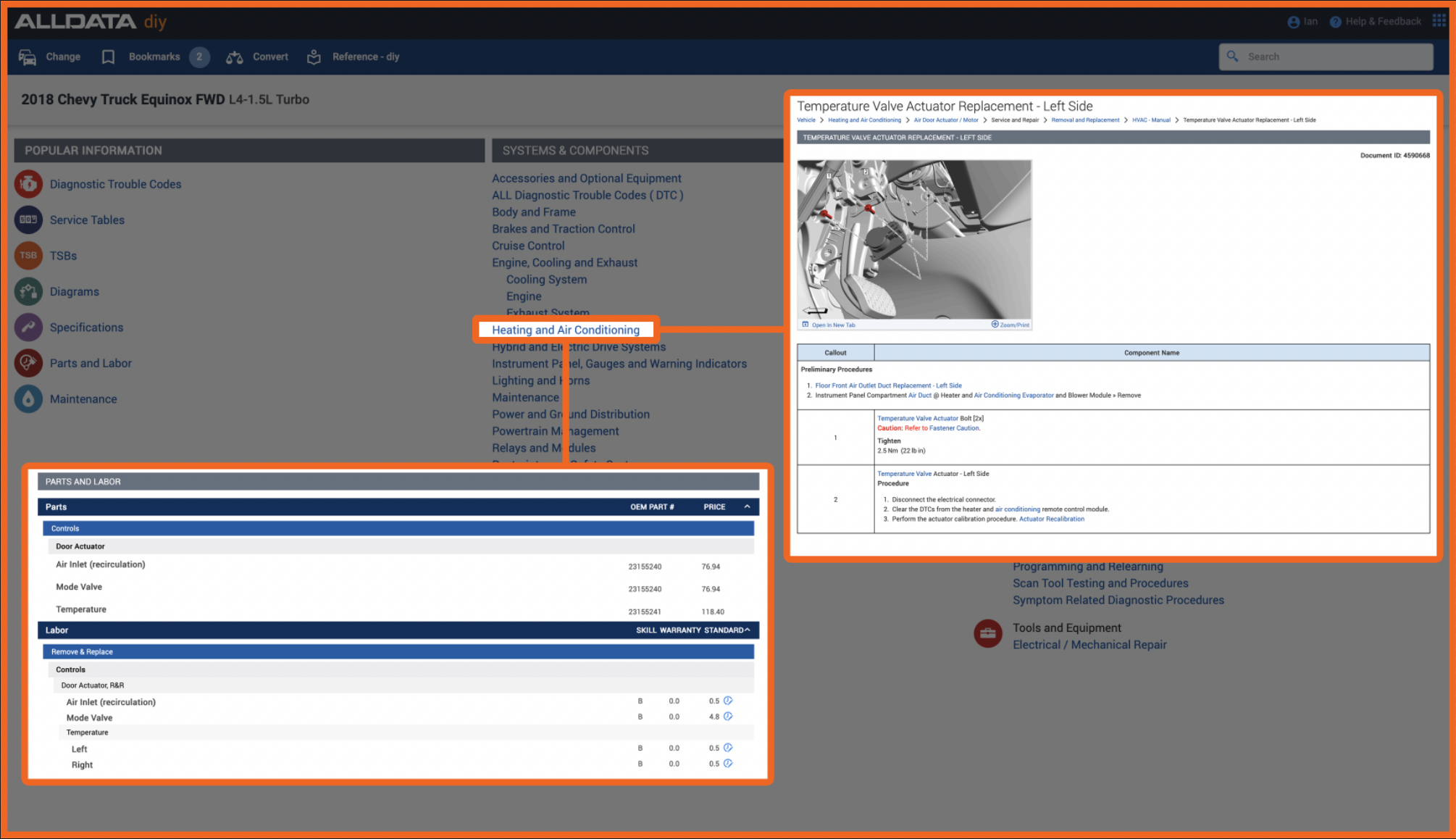
Use the Heating and Air Conditioning section in ALLDATAdiy to find the name your vehicle’s manufacturer uses, locate the door and its controls, and follow the testing procedure before replacing anything. On some vehicles, the parts are easy to reach. On others, you may wonder whether the actuator was installed before the dashboard, seats, or doors. Get your yoga mat ready. You may be in for an exercise in contortionism.
Can Air Pockets in the Cooling System Cause No Heat?
Yes. An air pocket can prevent hot coolant from circulating through the heater core, especially after a coolant change or cooling-system repair.
Some vehicles require a specific bleeding procedure, designated bleed screws, or a vacuum-filling tool. Following the manufacturer’s procedure helps prevent poor heater performance and engine overheating.
Diagnose the Problem Before Replacing Parts
When your car heater blows cold air, start with the simple checks. Verify the coolant level, watch the engine temperature, compare the heater-hose temperatures, and confirm that the temperature controls and blend door respond. Each result helps narrow down the cause and points you toward the next step.
Once you have identified the likely problem, use the vehicle-specific specifications, testing procedures, and repair information in ALLDATAdiy to confirm the diagnosis and complete the repair correctly.
A little troubleshooting now can save you from replacing every component between the radiator and dashboard. Before firing the parts cannon, make sure it is aimed at the part that actually failed. If all else fails, moving to a warmer climate may be easier, but probably not cheaper.
Not an ALLDATAdiy customer? Learn how a subscription could help you. ALLDATAdiy provides access to repair information on over 44,000 engine-specific vehicles, find yours. Return to see more DIY Helpful Tips.