


5 Common Car Problems DIYers Misdiagnose and How to Find the Real Cause
When working on a vehicle, it is easy to misdiagnose certain problems. After all, when an OBD-II scanner pulls a code related to an oxygen (O2) sensor, your mind naturally jumps to the component mentioned. However, knowing how to identify root causes instead of throwing parts at a problem is what separates a solid diagnostic workflow from money poorly spent.
Here are five of the most commonly misdiagnosed car issues and what their true root causes often are. Use this guide as a framework you can apply across the entire vehicle, helping turn a long-term project into a repair you can confidently complete over a weekend.
Car Battery Will Not Stay Charged
In the words of Monty Python and the Holy Grail, “I’m not dead yet!” could not be more applicable to your car’s battery.
Before assuming the battery is always the problem, it is worth noting that batteries do fail and usually at the worst possible time. But there are plenty of cases where the battery is not actually at fault.
If your car constantly needs a jump-start, that can point to something deeper. Instead of asking, “Do I need a new battery?” a better question is, “Why is the battery dead?” In many cases, the battery is doing exactly what it is supposed to do. It is just not being properly supported. That shifts your focus to the real issue: Is the battery not being charged, or is something draining it?
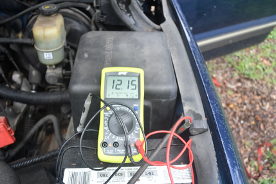
Before replacing anything, check the system voltage with the engine off and running. A healthy battery should read around 12.6 volts with the engine off and roughly 13.5 to 14.7 volts while running. If the charging system is not maintaining proper voltage, the problem goes beyond the battery.
You can also remove the battery to have it charged and load-tested. AutoZone offers this service for free. From there, evaluate the alternator, which can often be bench-tested if it is easy to remove.
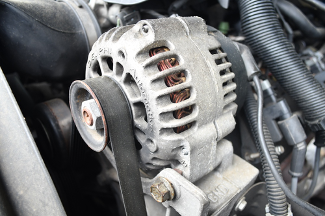
If both check out, start looking for a parasitic draw somewhere in the electrical system. Finally, inspect all battery terminals and grounds. Corrosion or a weak ground connection can restrict current flow and mimic the symptoms of a failing battery, leading many DIYers to spend money on a replacement they did not actually need.
What Causes O2 Sensor Codes
Chances are, if you have ever had your codes scanned at a parts store, you have seen one pointing to an “O2 sensor failure.” Before you crawl under the car and replace one of the multiple sensors on your vehicle, it is worth stepping back and understanding what that sensor actually does.
An oxygen sensor does not control the air-fuel mixture; It only reports it. Specifically, it tells the ECU whether the engine is running rich or lean. In other words, it is an informant, not the decision maker.
If the system is running lean or rich, there is usually a reason. Unmetered air from a vacuum leak, a dirty or failing mass airflow sensor, exhaust leaks upstream of the sensor, or fuel delivery issues can all skew the air-fuel ratio. The O2 sensor is simply reacting to those conditions.

Before replacing anything, look at fuel trims. They often tell a much clearer story than the code alone. Heavily positive fuel trims indicate the engine is compensating for a lean condition, while negative trims point to a rich condition. Either way, the root cause is typically elsewhere in the system and not the sensor itself.
Like the dead battery scenario, understanding the role of the component is key. Replacing an O2 sensor without addressing the underlying issue may clear the code temporarily, but it will not fix the problem.
Warped Reality: Why Are My Brakes Vibrating When Stopping
A common issue to chase is vibration under braking. You can look at heat-discolored rotors and assume they are warped, leading you to spend money on replacement rotors. In many cases, the rotors might have lasted much longer if other contributing factors had been addressed first.
In reality, true rotor warping on modern passenger vehicles is rare outside of extreme use. What you are often feeling through the brake pedal is uneven pad material transfer on the rotor surface. As the pads clamp down, that uneven layer creates variations in friction, which results in the pulsation you feel.
This condition can be caused by excessive heat, improper pad bedding, or a sticking caliper that keeps the pad in contact with the rotor. In some cases, worn suspension or steering components can exaggerate the sensation under braking.
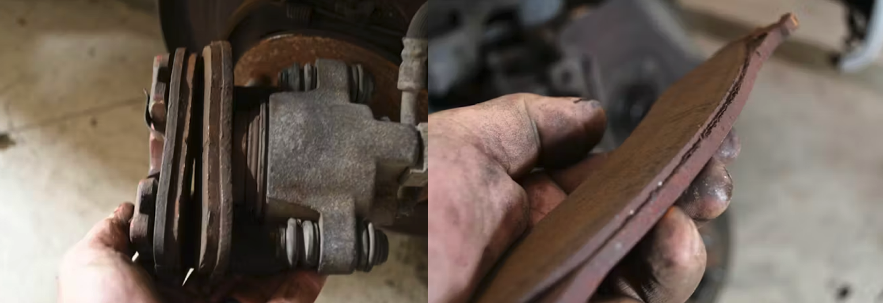
While rotors can be machined to restore a smooth surface, doing so removes material and reduces their ability to dissipate heat. In many cases, replacing rotors and pads together while ensuring the calipers are functioning properly is the more reliable long-term fix.
How to Locate an Engine Misfire
Engine misfires are one of the fastest ways to go down a diagnostic rabbit hole. It is easy to focus on the most likely failure point, which is usually ignition components like spark plugs, coils, or spark plug wires.
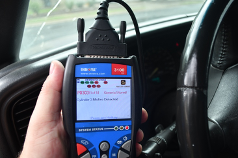
Swapping coils between cylinders is a solid first step. If the misfire moves with the component, you have likely found your problem. If it does not, it is time to look beyond ignition.
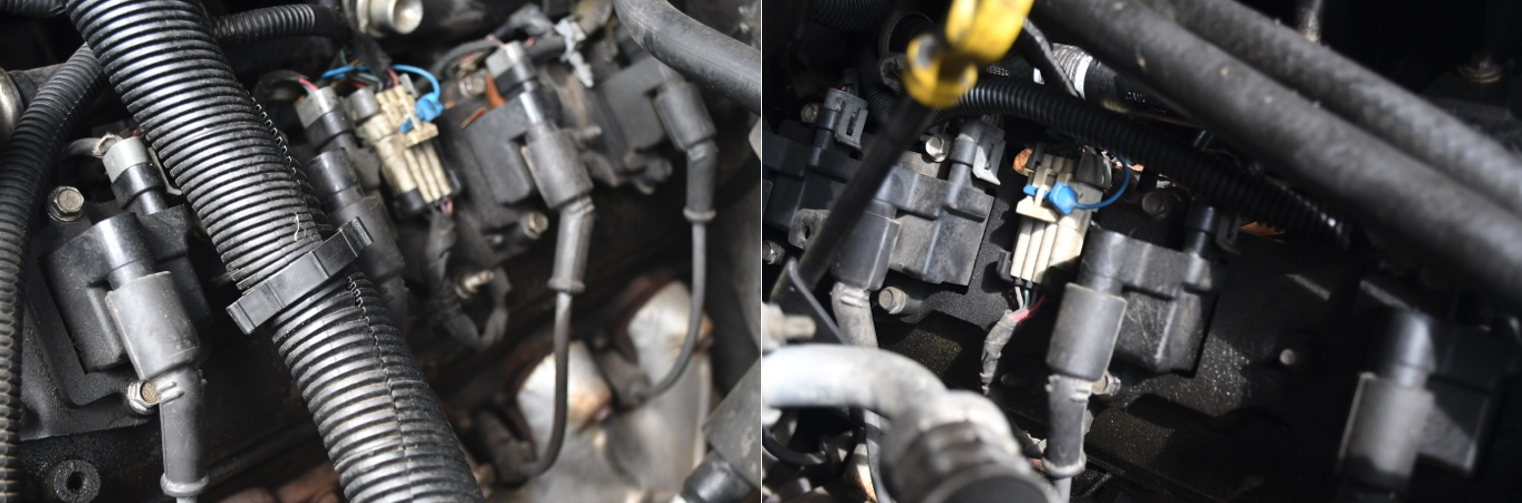
While ignition components can fail, they are not always the root cause. A faulty fuel injector can over-fuel or starve a cylinder. A vacuum leak can disrupt the air-fuel balance. Low compression from worn piston rings or valve issues can prevent proper combustion entirely.
If you suspect an injector issue, you can either remove and test it or clean it. For vacuum leaks, a smoke test is one of the most effective ways to pinpoint the source. If you are chasing a mechanical issue, a compression test can help identify a weak cylinder and guide you toward the root cause.
Humming Noise While Driving
Listening and identifying where a noise is coming from can be one of the most frustrating parts of working on a vehicle. If you hear a humming or growling sound that changes with speed, it is easy to assume a wheel bearing or another mechanical component is failing.
That is not always the case. Uneven tire wear, especially cupping, can create a noise that sounds nearly identical to a bad wheel bearing. Certain tread patterns can also generate noticeable road noise that increases with speed.
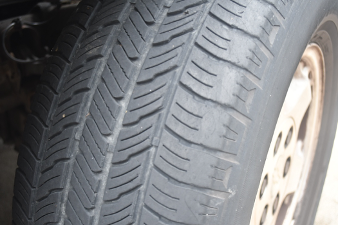
Before replacing anything, rotate your tires. If the noise changes location or character after the rotation, you are likely dealing with a tire issue rather than a failing bearing. This also gives you a chance to inspect the tires for uneven wear or damage.
It is a simple step, but it can save you from replacing parts that were never the problem.
How to Diagnose Car Problems Instead of Guessing
Chasing symptoms does not have to be complicated. Taking a practical, system-based approach to identifying the underlying issue can set you up for a successful repair.
If you have an ALLDATAdiy account, you can search by symptom to pull up probable causes and OEM diagnostic procedures. That allows you to move beyond guessing and follow a structured path provided by the manufacturer to help guide you toward the root cause.
Instead of replacing the same part multiple times or masking the real issue, take a more technical approach and solve the problem correctly the first time. The time, money, and confidence you gain from a proper repair will far outweigh the alternatives.
Not an ALLDATAdiy customer? Learn how a subscription could help you. ALLDATAdiy provides access to repair information on over 44,000 engine-specific vehicles, find yours. Return to see more DIY Helpful Tips.