


Allison’s Automotive: 40 Years of Problem-Solving, Racing, and Growing with ALLDATA
Mark Allison Recounts his 40 Years of Change and Success
Mark Allison doesn’t need to be behind the wheel to feel at home. Put him on a racetrack, in the driver’s seat, as a race instructor, or even as a spectator, and he’s exactly where he wants to be.
“Even when I’m not racing,” Mark said, “I’m just happy being at a racetrack. It’s my happy place.”
That mindset explains a great deal about this shop owner, mentor, racecar builder, and ALLDATA customer of 40 years: his love of the craft, his fascination with how things work, and the way he’s built a career around solving problems that other people avoid, whether the issue is a fogged-in track at the raceway or an obscure electrical issue on a vintage Italian car.
Early Tech Adoption Becomes a Competitive Advantage
Mark’s shop, Allison’s Automotive, embraced technology early, not as a trend, but as a practical tool for staying organized and profitable. He adopted computerized shop systems in the early 1980s, when software arrived on 5-inch floppy disks. “The early ALLDATA program came with a book of like 20 different floppy discs,” he said.
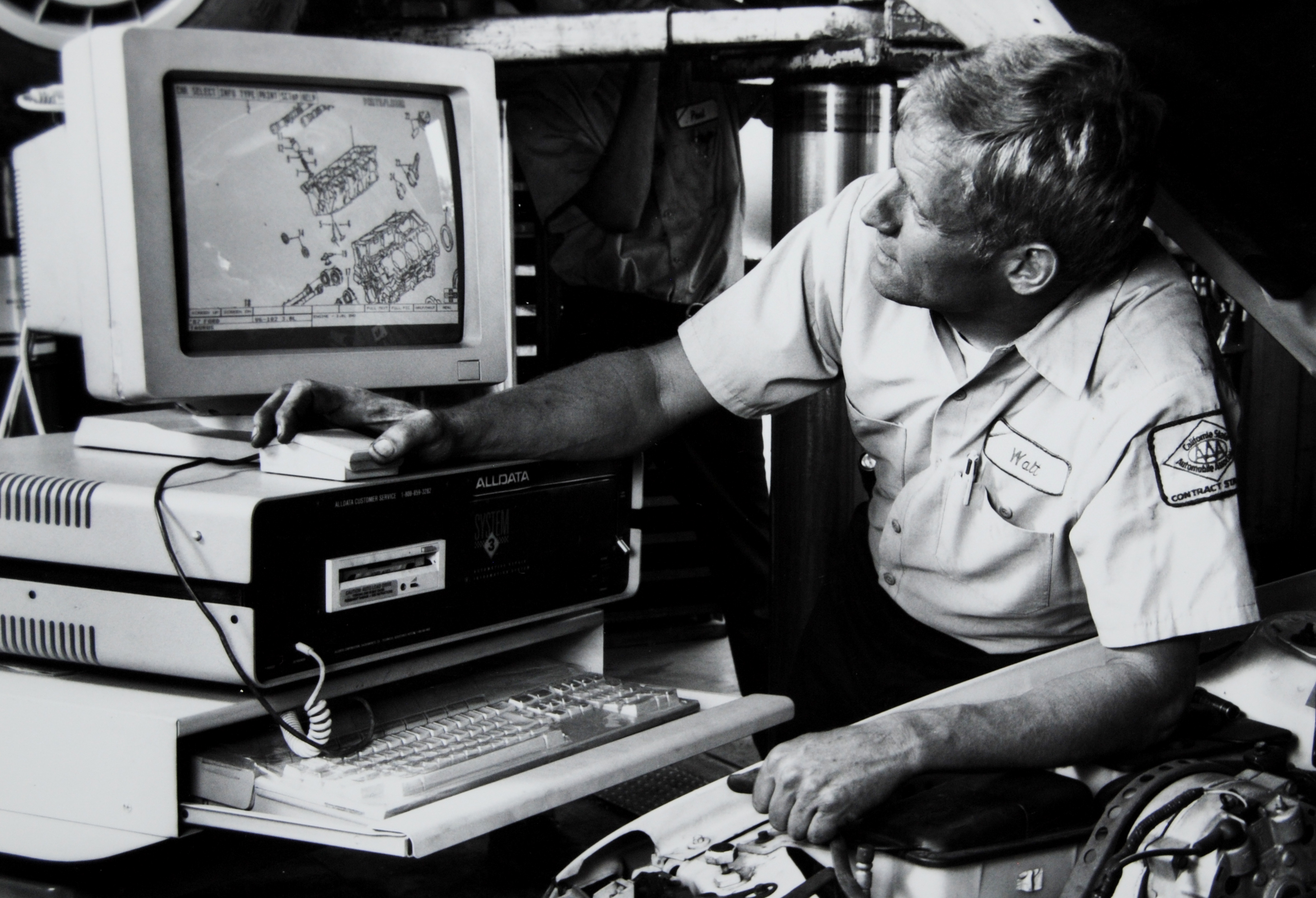
Mark wasn’t just chasing novelty; he was also chasing clarity: tracking costs, measuring profitability, and managing a business with data instead of guesswork.
The pain point was more than just about replacing physical shelves of manuals, updated year after year, taking over the space. An even bigger issue was accessing the right information at the right time, a concern that became particularly critical within electrical data.
That way of thinking set up a natural fit for Allison’s Automotive when ALLDATA entered the market in 1986.
“Back then, in manuals, you rarely got wiring diagrams,” Mark said. “Generally, you had to buy separate books to get wiring or electrical information.”
“ALLDATA solved our biggest early challenge—finding repair information fast,” he explained. “When it arrived, suddenly we had wiring diagrams and electrical data we couldn’t get anywhere else.”
As the shop expanded and brought on service writers, ALLDATA also helped streamline estimating and front-office workflow. “Being able to do the estimating quickly made our whole situation more accurate,” Mark said. “It eliminated a ton of follow-up calls.”
With 20 to 25 cars sometimes lined up at opening, Mark said the difference between a shop that moves and a shop that stalls can be measured in valuable minutes that add up throughout the day. “It allowed things to proceed much quicker,” he said. “We could get the cars into the shop and start the process of doing a diagnosis.”
And when the shop ran into strange issues not covered by standard procedures, Mark found value in another part of the platform: community-driven insight. “We had a couple of instances where someone’s problems covered in Community provided a solution to help us diagnose a problem pretty quickly—oddball things that aren’t really covered under repair procedure,” he said.
Forty Years of ALLDATA Loyalty
Forty years of loyalty doesn’t happen because of a feature list alone, but rather, when a company earns trust repeatedly across decades of change.
For Mark, responsiveness has always mattered, especially when working on rare or hard-to-document vehicles like a classic Alfa Romeo.
“We would submit a library request, and they were able to come up with stuff always within half an hour,” he said. “It might have been a wiring diagram for a 1980’s Alfa Spider—something we couldn’t find easily.”
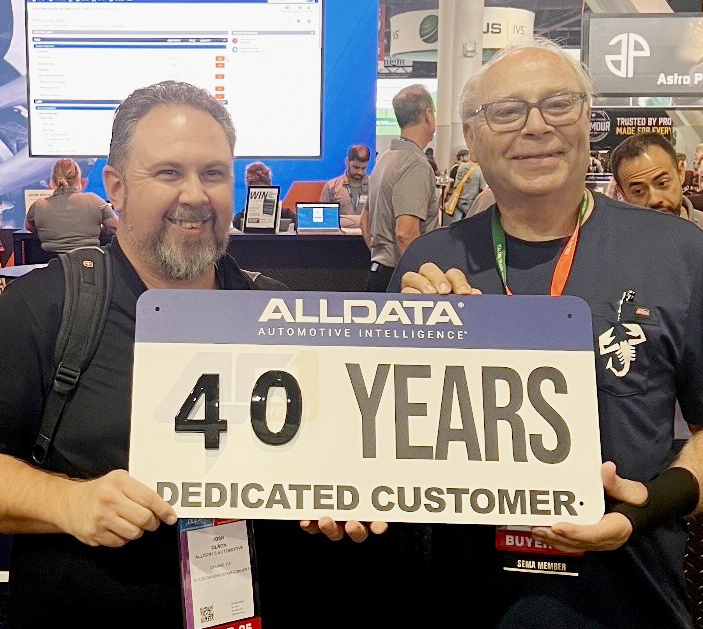
Mark also appreciates the way ALLDATA has always engaged with customers, particularly at SEMA, where he’s participated in beta testing and saw the culture up close.
One moment that stuck with him was when an ALLDATA team member pulled him aside and gave him an impromptu technical session on air-fuel monitoring and diagnosis. “He sat with me for about an hour,” Mark said. “It was out of the blue. He did this on his own. And it seemed like this is just a company that really appreciates their customers and gives back to them.”
The Shop That Said “Yes”
Long before Allison’s Automotive became known for Fiat expertise, Mark was building a reputation for taking on the “oddball” work, the car jobs other shops didn’t want because they weren’t familiar or because the problem wasn’t straightforward.
That instinct goes back to his earliest days in business when Mark opened his first shop in Azusa, CA, in 1971 and leaned into the jobs that required curiosity. “I just didn’t turn anything away,” he said. “I thought it was interesting to try and figure out something that I wasn’t familiar with.”
By 1981, he opened Allison’s Automotive in Upland, CA, which, in the early days, wasn’t a specialty shop. Mark worked on a bit of everything, including a heavy mix of British cars, until a turning point in 1985 changed the direction of the business.
That was the year Fiat pulled out of the U.S. market. Mark went to the local dealer to pick up parts for a customer and received an unexpected offer.
I just didn’t turn anything away,” he said. “I thought it was interesting to try and figure out something that I wasn’t familiar with.”
The dealership no longer wanted to remain a parts business and asked him if he wanted to buy all the parts. “They made me a deal,” Mark said. “I would get a year’s payments with no interest, and, in return, they would sign over the franchise to me for parts and service.”
Mark walked back to his truck, returned a few minutes later, and started loading shelves. “I became a Fiat dealer overnight,” he said.
With that, Allison’s Automotive didn’t just gain parts inventory, but rather, an identity. The Fiat business grew fast, and the British-car focus faded into the background. Since 1985, Fiat has been at the center of the shop’s story.
Efficiency Is Movement, Not Motivation
Like many shop owners, Mark has learned that growth comes with a cost. When Allison’s Automotive expanded, the work shifted, not from cars to paperwork, but from cars to people.
“When I was first expanding, I ended up dealing more with people problems than with car problems,” he said. “Every day, somebody had an issue, some crisis in their life. I became almost like an HR manager instead of a repair manager.”
Hiring changed over time, too. In the general repair era, Mark needed technicians with broader knowledge. As the shop moved deeper into restoration and custom work, the hiring challenge became more specific.
“It was really difficult to find people that wanted to spend the time to do something kind of custom—people with knowledge of older cars, not just do a repair,” he said.
One of Mark’s most practical insights is also one of the simplest: A shop can lose hours without realizing it, not because of laziness, but rather, through layout and workflow. When he started in business alone, efficiency wasn’t optional.
“If I’m not efficient, I can’t make any money at all,” he said.
As the shop grew, Mark watched younger technicians unintentionally waste time, walking back and forth to toolboxes, making dozens of small trips that add up to real labor hours.
“I really tried to focus with these guys on even their general movements through the shop,” he said. “Streamline where things were positioned, how their tools would be set up, just to cut down on how many steps they were taking.”
A Crisis that Sparked Reinvention
For decades, Allison’s Automotive ran as a general repair operation with a specialty reputation. But in 2003, Mark’s career took another sharp turn. He had a heart attack.
Mark couldn’t be in the shop the way he had shown up previously, and Fiat parts were becoming harder to source in the U.S.
Instead of waiting for the market to improve, he started asking a different question: What if the parts simply didn’t exist anymore and someone had to make them? During recovery, Mark began exploring what it would take to produce the performance parts his customers needed.
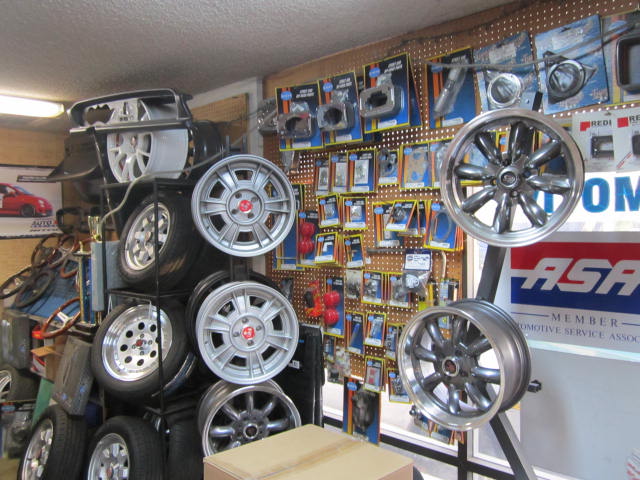
“That’s when things changed,” he said. “We started an online parts business, mostly custom performance parts that no one else was making for those cars.”
That move expanded Allison’s Automotive far beyond Upland. Mark became known internationally, shipping parts around the world because there were so few reliable sources. “That was really a turning point,” he said. “That’s really what made my name.”
Mark also made a business decision that many shop owners struggle with to this day: investing during a downturn. As a result, he was able to convince manufacturers to take small-volume Fiat parts seriously during a recession.
“Companies that blew us off before said, ‘We don’t have anything to do. We’ll make you 50 of these,’” he said. “Even after the recession ended, they kept making parts for us.”
While others pulled back, Mark expanded. Some competitors disappeared, and Allison’s Automotive absorbed that market share. “It was a gamble,” he admitted. “My wife was kind of freaked out that I was spending all our money when the rest of the country was retracting. But in the long run, it turned out to be a great decision.”
From Wrenching to Mentoring
Today, Mark’s role has evolved again. He’s stepped away from daily shop operations and moved into a mentor and advisor role, helping guide a newer generation.
When we spoke, Mark was still riding the high from a recent weekend at the track, strapped into the passenger seat of some extremely fast machines driven by students in a racing school session.
He’s also shifted into more restoration work, performance development, and race-related projects, like a warehouse space he now uses to build engines, prep race cars, and push development forward on older Fiat platforms.
“I’ve got four race motors on stands right now,” he said.
And the work isn’t theoretical. Mark is chasing real gains with period-correct constraints. In vintage racing, forced induction is often off the table, so the performance must come from meticulous naturally aspirated development.
“We’re making more power than anybody’s ever made out of a Fiat twin-cam engine,” he said.
A Weekend at the Track and a Lifetime in Cars
Whether he’s running a shop or managing a fogged-in track at a raceway, Mark’s comfort level isn’t fueled by pure adrenaline alone—it’s driven by familiarity earned over time. He’s been around motorsports long enough to remember building race cars the hard way, like building a 1967 Camaro racecar from a rolling shell picked up for $150 from a wrecking yard, cutting out the roll cage when that car crashed, buying another shell and repeating.
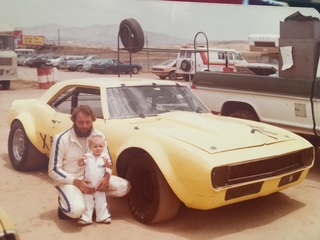
For Mark, it was never just about speed, but about the build, the approach, and the satisfaction of getting something right.
“I’m just passionate about doing really cool stuff with cars,” he said. “You solve problems. You get that warm, fuzzy feeling when you solve an issue and you make something perform even better than it was designed to do.”
For Mark, that feeling has never gotten old.
You can hear it in the way he talks about building engines and the way he still lights up describing track days. And it’s there in the way Allison’s Automotive has continued evolving from general repair to Fiat specialization, to international parts development, all while staying rooted in the same core idea: Solve the problem. Do it right. Keep improving.
